Med Report Winter 2025

Med Report Winter 2025

Mediterranean

State Report

Winter 2025

SUMMARY

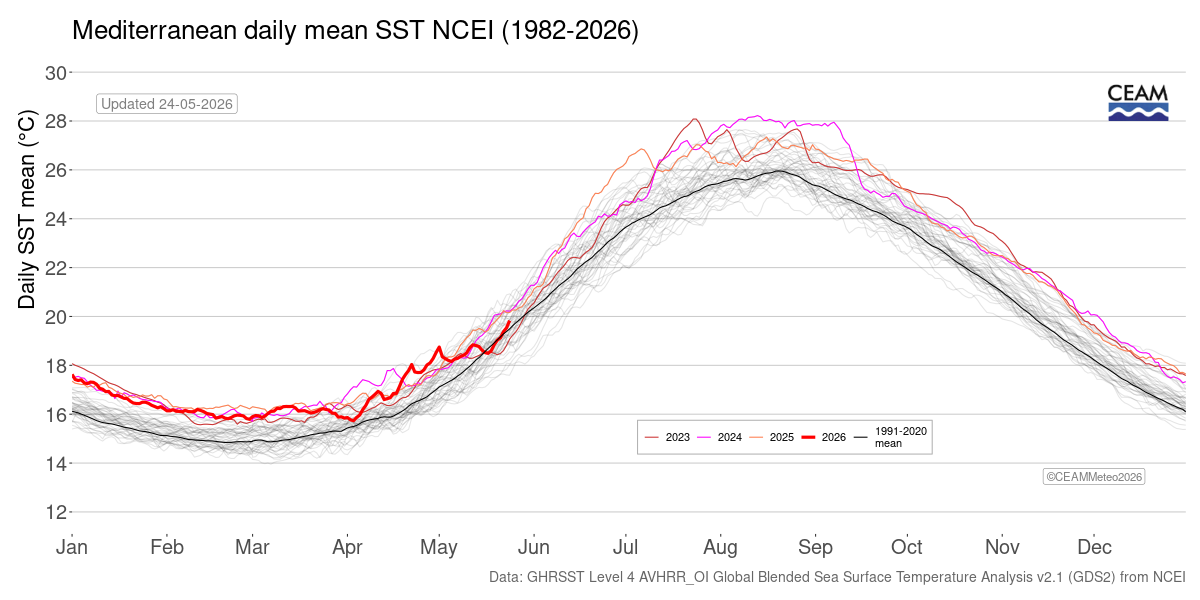
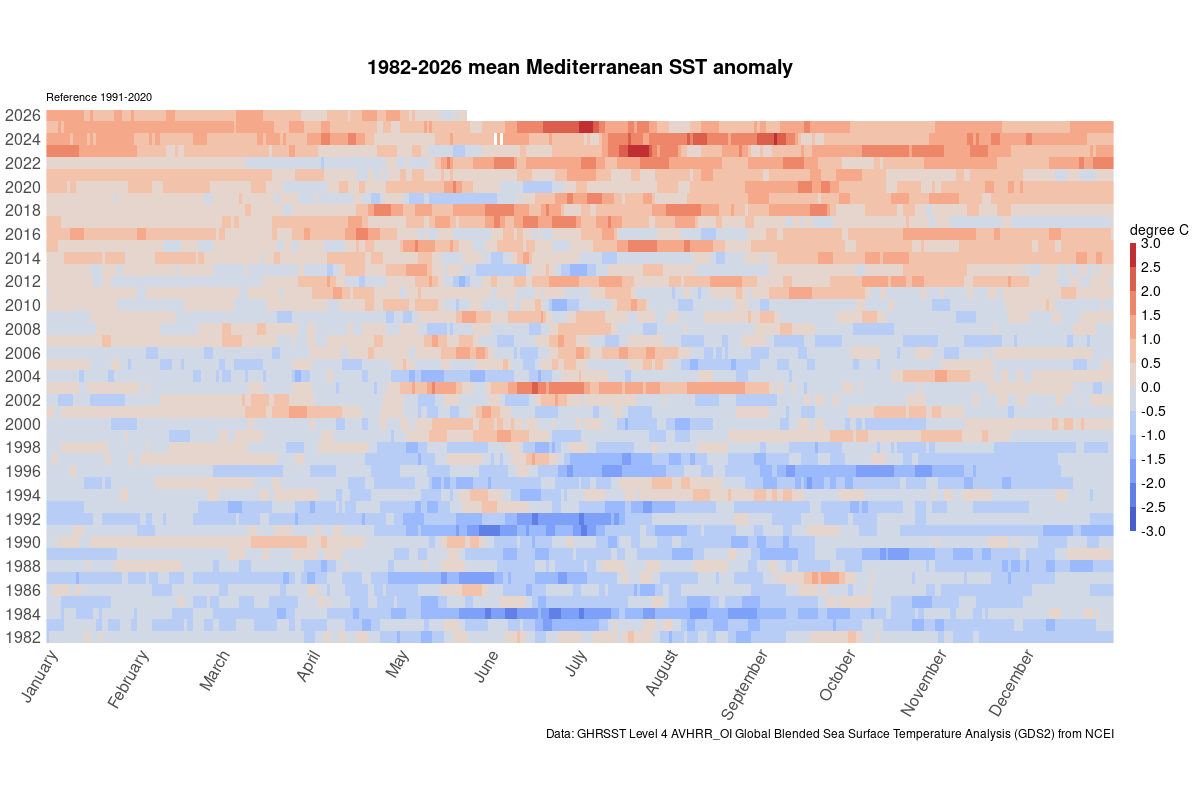
  • Mean Mediterranean SST has been clearly over the 1991-2020 climatological reference for the whole season
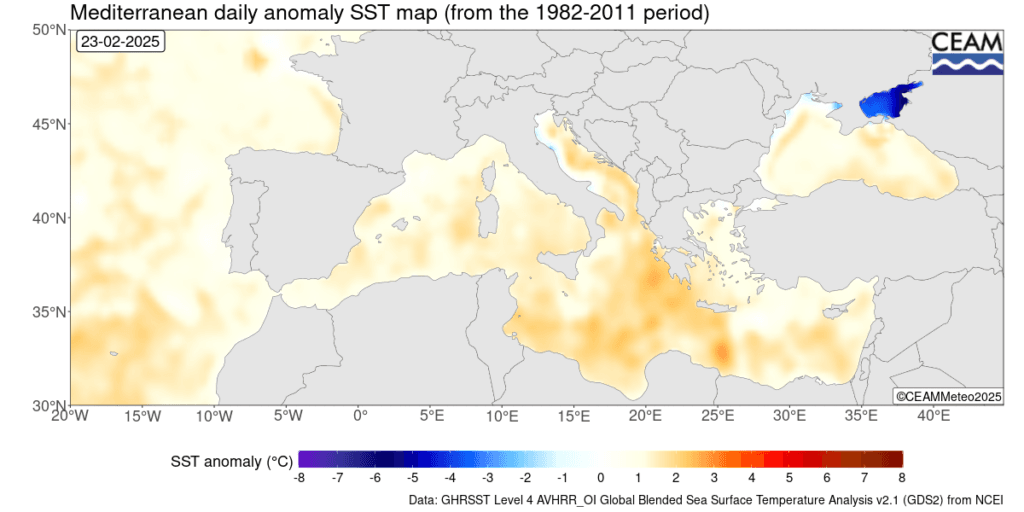
  • Mediterranean averaged SST anomaly was of 1.5ºC with maximum value reaching 2.6ºC
  • Persistent MHW events affected the Eastern Mediterranean basin with mean intensity of 2.5ºC during February
Med SST in Numbers
MHW in Numbers
Intensity
Categories

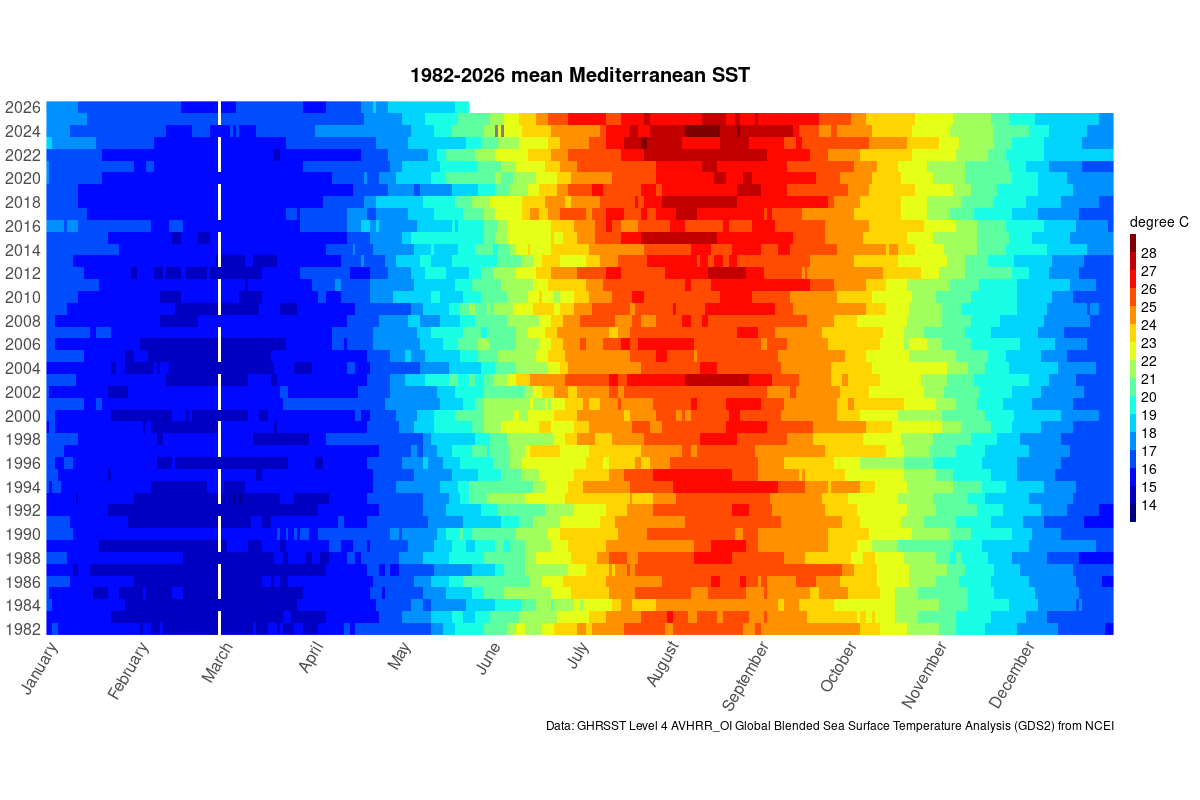
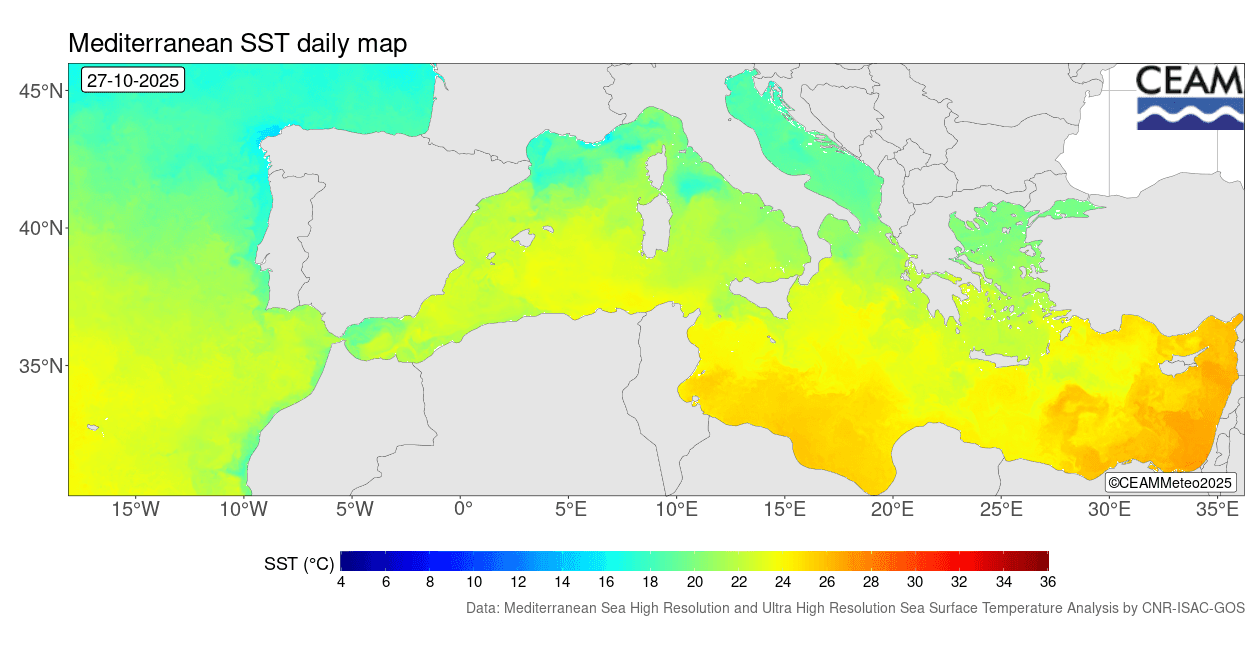
Following the observed behaviour in previous months, mean Mediterranean SST was clearly above the climatological values for the whole winter, from December to March. Mean SST values reamined approximately 1ºC above normal values, with a mean anomaly around 2°C. January mean SST ranked to the second highest value in the historical record, only after 2024, with 19ºC. AJUSTAR TAMAÑOS DE FUENTE

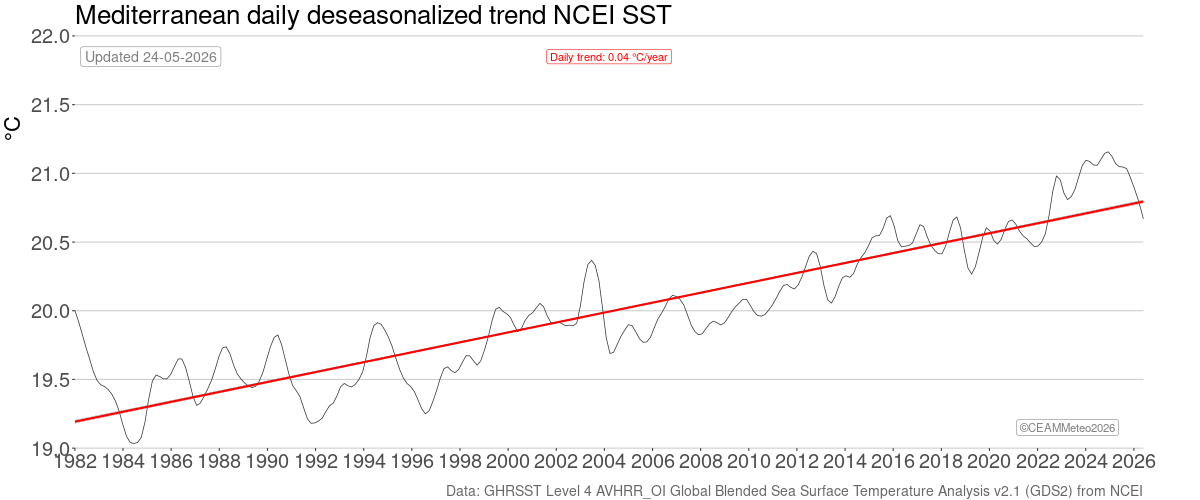
SST - Long term trend

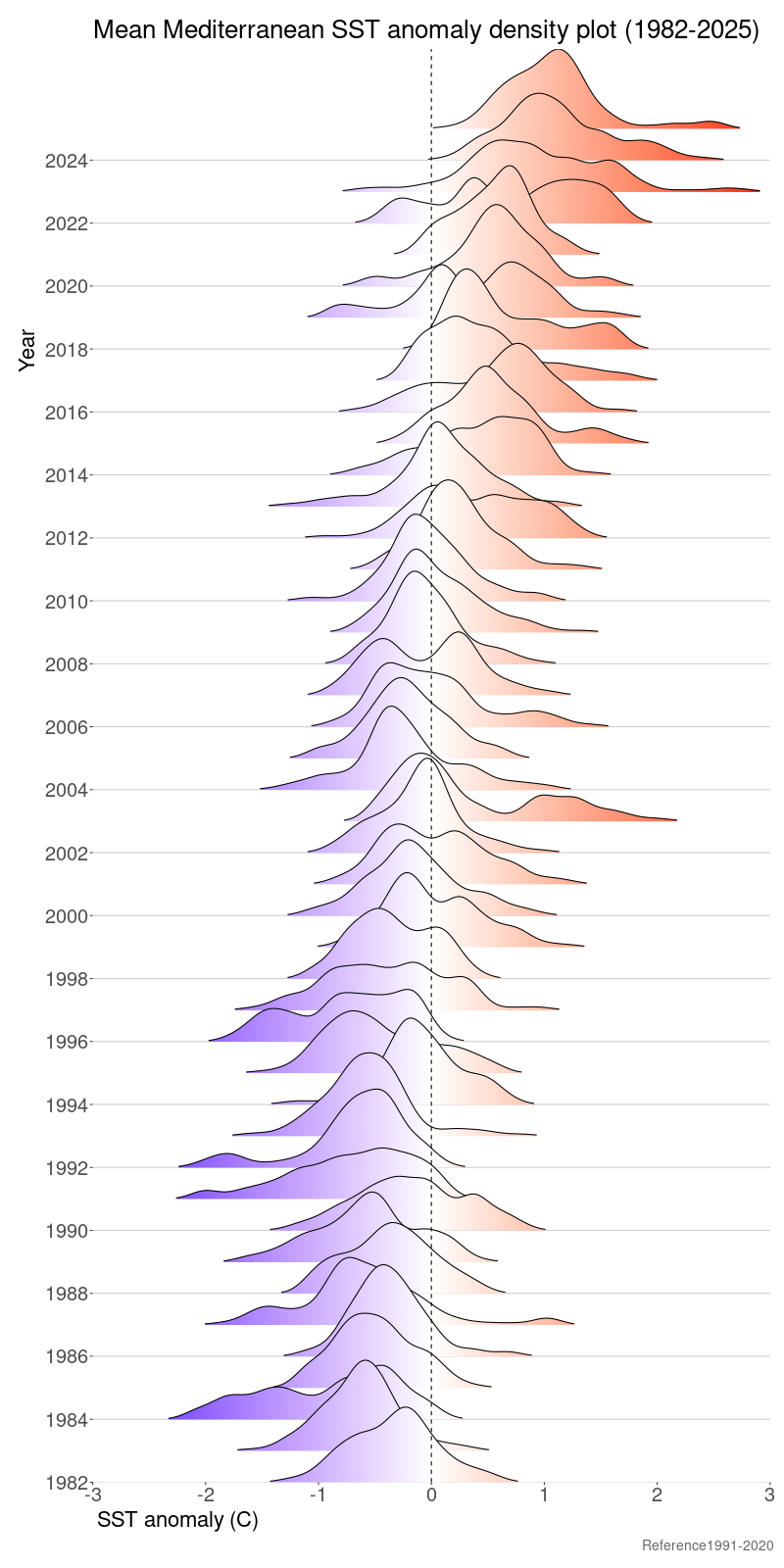
Long term trend for mean Mediterranean deseasonalized SST persisted to be positive for 2025. Updated trend was of 0.4ºC per decade.

Long term trend for mean Mediterranean deseasonalized SST persisted to be positive for 2025. Updated trend was of 0.4ºC per decade.

Mediterranean SST shows a progressive increase since the start of the 1980s with a cliear shift towards positivie values, especially since 2010. This has derived in an increase in the duration of summer SST values but also in higher winter SST records. Since 2015, positive mean Mediterranean SST anomalies show an overwhelming predominance.

Daily SST data obtained from Mediterranean Sea – High Resolution L4 Sea Surface Temperature Reprocessed

SST - Winter 2025 Summary

June

Mediterranean SST shows a progressive increase since the start of the 1980s with a cliear shift towards positivie values, especially since 2010. This has derived in an increase in the duration of summer SST values but also in higher winter SST records. Since 2015, positive mean Mediterranean SST anomalies show an overwhelming predominance.

July

Mediterranean SST shows a progressive increase since the start of the 1980s with a cliear shift towards positivie values, especially since 2010. This has derived in an increase in the duration of summer SST values but also in higher winter SST records. Since 2015, positive mean Mediterranean SST anomalies show an overwhelming predominance.

August

Mediterranean SST shows a progressive increase since the start of the 1980s with a cliear shift towards positivie values, especially since 2010. This has derived in an increase in the duration of summer SST values but also in higher winter SST records. Since 2015, positive mean Mediterranean SST anomalies show an overwhelming predominance.

Marine Heat Waves - Winter 2025

  • Marine heat waves were present from mid January to late February in the Eastern Mediterranean
  • Mean MHW intensity was 1.5ºC, with a maximum intensity of 2.5ºC in February 3rd
  • Total MHW affected area was 35% of the Mediterranean basin
Marine heat waves affected the Eastern Mediterranean

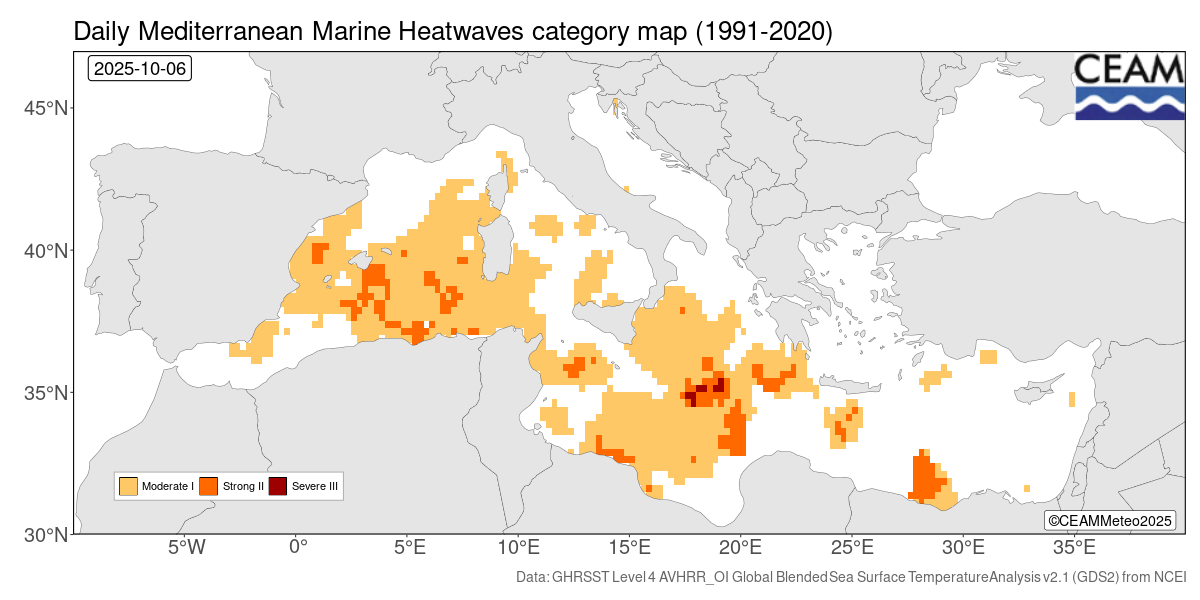
During most of the winter, a persistent MHW situation was observed in the Eastern Mediterranean. Shorter and smaller MHW events were also observed in the Western Mediterranean.

The most intense MHWs were observed in the area between Egypt and Cyprus.

Título del apartado con icono y fondo

Contenido de la sección en fondo blanco. Contenido de la sección en fondo blanco. Contenido de la sección en fondo blanco. Contenido de la sección en fondo blanco. Contenido de la sección en fondo blanco. Contenido de la sección en fondo blanco. Contenido de la sección en fondo blanco. Contenido de la sección en fondo blanco. Contenido de la sección en fondo blanco. Contenido de la sección en fondo blanco. Contenido de la sección en fondo blanco. Contenido de la sección en fondo blanco. Contenido de la sección en fondo blanco. Contenido de la sección en fondo blanco Contenido de la sección en fondo blanco. Contenido de la sección en fondo blanco. Contenido de la sección en fondo blanco. Contenido de la sección en fondo blanco. Contenido de la sección en fondo blanco. Contenido de la sección en fondo blanco. Contenido de la sección en fondo blanco
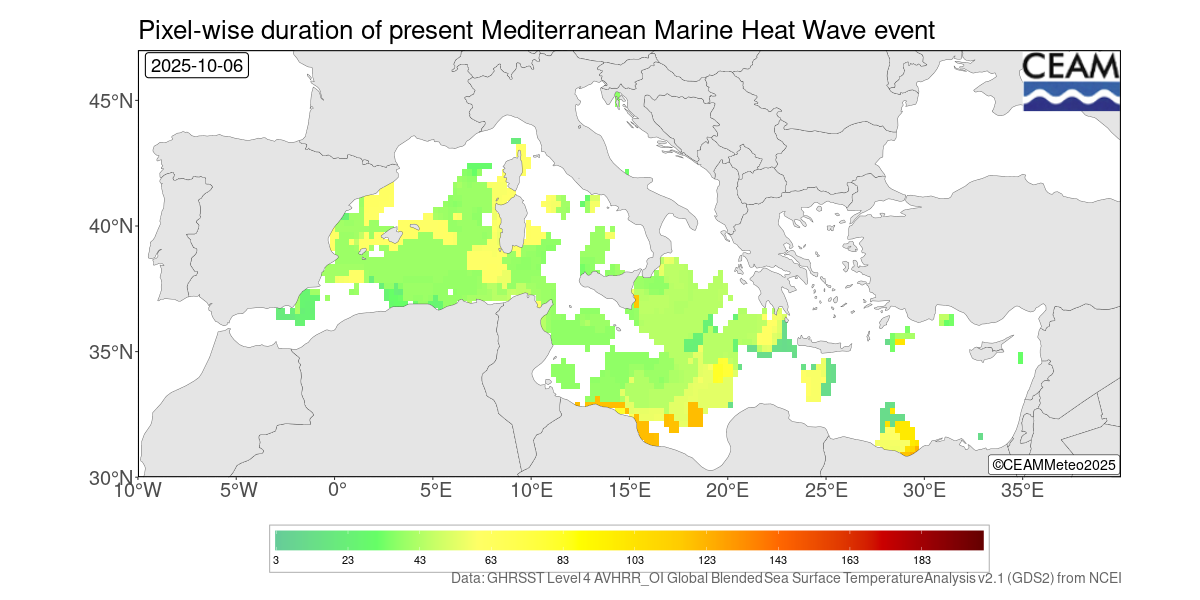
Monthly MHW data obtained from daily SST data from Mediterranean Sea – High Resolution L4 Sea Surface Temperature Reprocessed

Marine heat waves - Last year evolution

Mediterranean

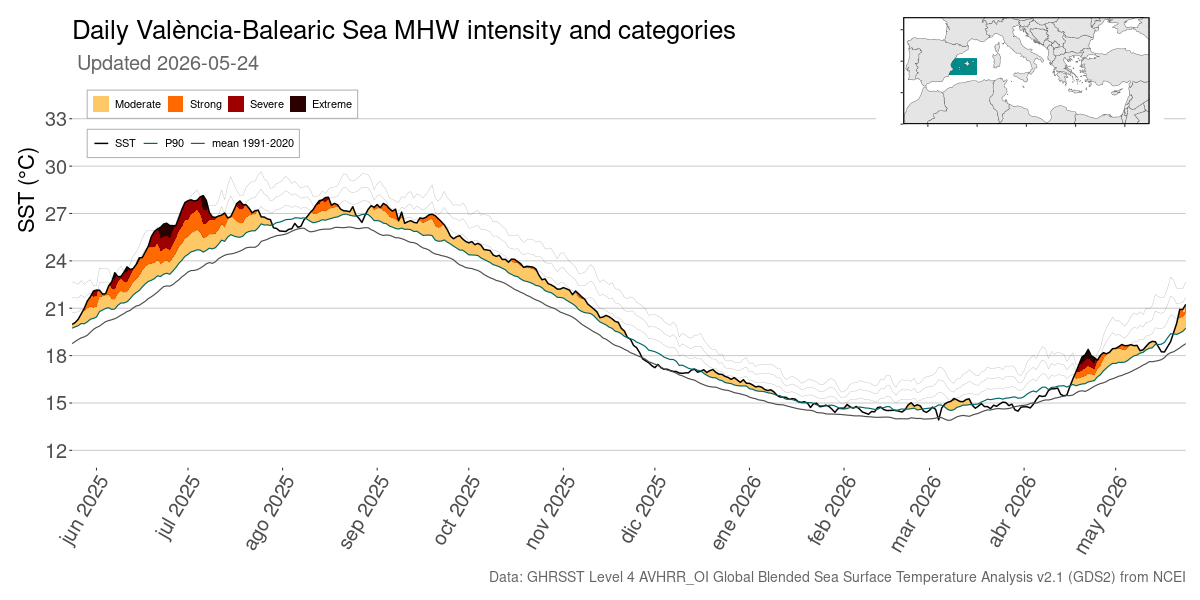
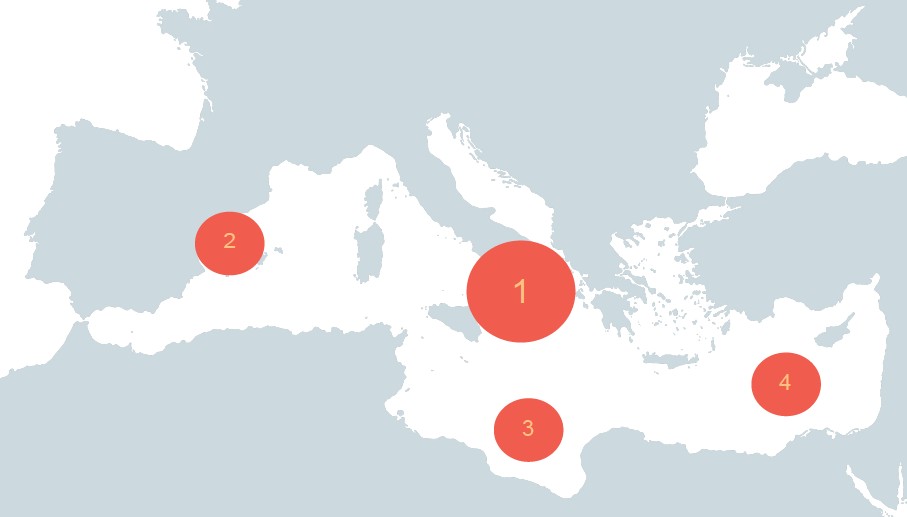
During the last year, all Mediterranean subregions have experimented MHW situations, especially in summer months. Most of autumn no MHW conditions were observed.

The highest MHW category recorded was ‘severe’, observed in the eastern Mediterranean in mid-February.For the last months (December to March) the most intense MHW events were observed in the Eastern and Central Mediterranean.

During January and February, moderate MHWs were recorded in the central and eastern Mediterranean, with periods of severe conditions, particularly in the eastern basin.
Some text here

About Mediterranean State Report

Mediterranean State report is an initiative of the Mediterranean Center for EnvironmentalStudies (CEAM) Meteorology and Climatology area to to periodically review and update sea surface temperature and marine heat waves climatology and trend in the Mediterranean basin for both the scientific community, stakeholders and the general public.

How to cite this report

Citation: Mediterranean Sea Surface Temperature report (Winter 2025). Meteorology and Climatology Area. Mediterranean Centre for Environmental Studies. 2025. doi: 10.13140/RG.2.2.14561.83044

Disclaimer

MEDMOS and the CEAM Foundation cannot be held liable for any use that third parties may make of the content of this report, whether text or images.

Data sources

All  maps and plots in this report have been created from free, open-access datasets provided by international scientific organizations.

Contact

Please, contact our team for any further information requirement on MEDMOS on info@medmos.eu

Acknowledgment

MEDMOS and the CEAM Foundation are supported by Generalitat Valenciana

Licensing: All the maps and graphs in this document have been created by the CEAM Meteorology and Climatology area. This report is licensed under an Attribution-NonCommercial-NoDerivatives 4.0 International (CC BY-NC-ND 4.0) Creative Commons license (https://creativecommons.org/licenses/by -nc-nd/4.0/legalcode)